In contemporary residential architecture, luxury is no longer associated solely with size, striking design, or the economic value of a home. Today, true luxury lies in the quality of the space, the comfort it provides, and the way architecture relates to its surroundings and the passage of time.
In this context, materials play a central role. They are not a superficial aesthetic choice but the foundation that defines the project’s identity, its climate performance, durability, and the sensory experience of its occupants.
Especially in Mediterranean environments like the Costa Blanca, where architecture faces demanding conditions (intense sunlight, sea humidity, wind, and temperature fluctuations), material selection becomes a strategic decision that determines a home’s long-term value.
Luxury Architecture: The Language of Materials
In high-end architecture, materials are integrated from the very beginning of the design process, not just applied as finishes at the end. Every texture, surface, and construction system is chosen with spatial intention and technical logic.
Materials influence key aspects such as:
-
How the house regulates interior temperature
-
The connection between indoors and outdoors
-
The perception of solidity or lightness in the space
-
The quality of natural light
-
The aging of the building
Therefore, contemporary luxury architecture is defined by material coherence. It does not seek to accumulate finishes but to select those that bring quality, permanence, and meaning.
Natural Materials: Connecting with the Place
High-end residential architecture uses natural materials for very specific reasons: they perform well technically, maintain quality over time, and help the home relate naturally to its environment.
Natural Stone: Beyond a Simple Finish
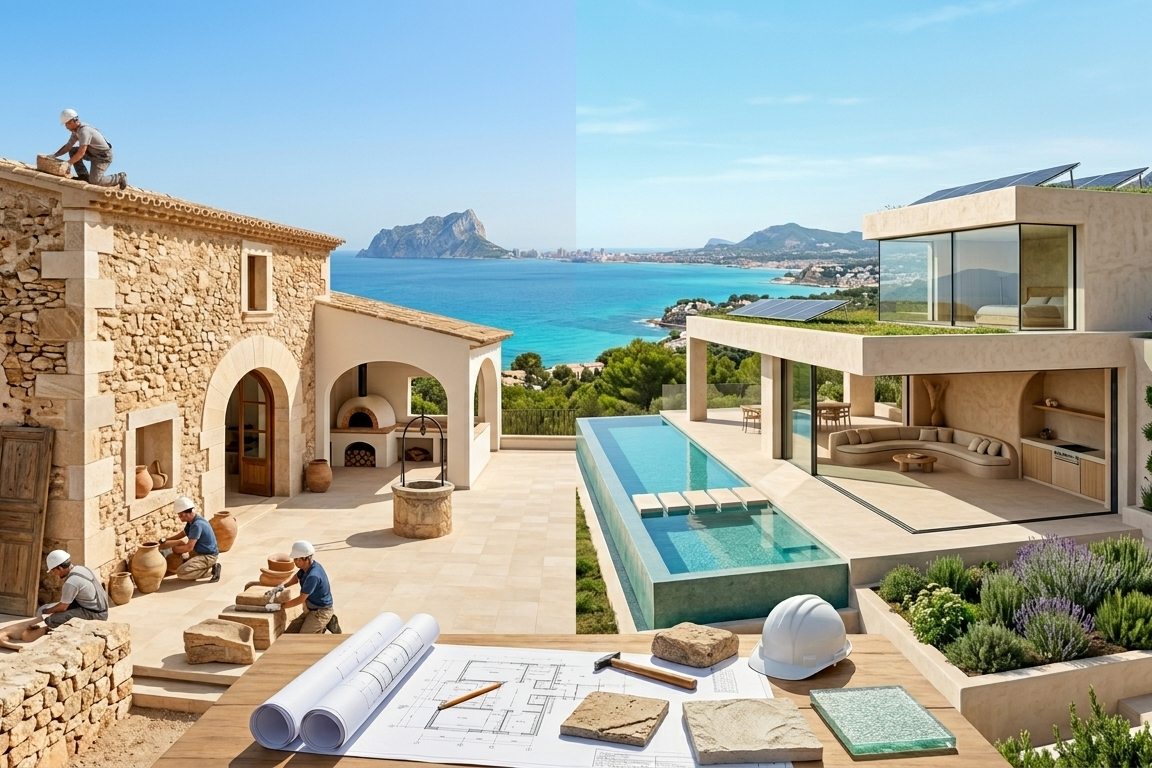
In the Mediterranean, stone has historically been used out of necessity before aesthetic intention. Its use responded to local availability and its ability to address basic needs such as weather protection, structural stability, and adaptation to topography.
Stone’s thermal mass helps buffer temperature fluctuations, increasing comfort and improving the building’s energy performance, especially in areas with high sun exposure. Its durability and natural aging make it suitable for demanding coastal climates.
When used in walls, façades, or structural elements, stone establishes a coherent relationship between architecture, climate, and site—acting as an integral part of the project, not merely a finish.
Wood: Warmth and Well-being
In contrast to stone’s solidity, wood brings warmth and intimacy. Its presence transforms the perception of space, making it more habitable and welcoming.
In luxury architecture, wood is used in interior finishes, high-performance joinery, or shading systems. Beyond its aesthetic value, wood provides acoustic comfort, regulates indoor humidity, and generates an experience difficult to replicate with synthetic materials.
In seaside projects, special attention is given to wood’s ability to resist salt air and age gracefully without losing performance.
Large Format Minerals and Stones
Using large-format stones and minerals mainly addresses continuity, durability, and construction quality. Fewer joints create a cleaner, more orderly, and visually spacious environment while making maintenance easier.
These materials are very stable, resist wear, moisture, and time, making them ideal for intensive use and ensuring the project’s longevity. Their interaction with light helps create more balanced and harmonious spaces.
Exposed Concrete: When Structure is the Finish
In high-end Mediterranean villas, exposed concrete is used for a simple reason: it combines structure and finish without unnecessary layers. The material is shown as it is, forming the basis of the architecture.
Concrete performs especially well in this climate due to its thermal mass, which helps regulate interior temperature—a key factor in homes with large glazed areas and high sun exposure. Near the sea, it also withstands humidity, sunlight, and wear, reducing long-term maintenance.
This material demands precision: formwork, joints, and texture cannot be improvised—they are part of the final result. Every detail must be planned from the design stage.
When executed correctly, exposed concrete allows for clear spaces, continuous volumes, and architecture where structure is not hidden but defines the character of the home.
Glass: Transparency and Connection to the Landscape
Luxury residential architecture increasingly seeks to blur the boundaries between indoors and outdoors. Glass becomes a fundamental material in this context.
High-performance glazing solutions allow for large transparent surfaces without compromising thermal insulation or comfort. They maximize natural light, visually expand interiors, and create a direct relationship with the surroundings.
In homes with privileged views, materiality almost disappears, giving prominence to vistas, light, and space.
Why Are Materials So Important in Luxury Architecture?
Materials determine a home’s climate performance, durability, sensory experience, and its relationship with the environment and the passage of time.
Which Material is Best for Building a Home in the Mediterranean Climate?
It depends on orientation, sun exposure, and surroundings, but materials with high thermal inertia like stone and concrete generally provide better temperature control and long-term durability.
Which Material is Most Resistant for Exterior Facades?
Natural stone, concrete, and some mineral finishes offer high resistance to climate, wear, and the passage of time, especially in areas with intense sun exposure.
Which Materials Maintain Indoor Temperature Best?
High thermal mass materials, such as stone and concrete, absorb heat during the day and release it gradually, stabilizing interior temperature.
What Should Be Considered When Choosing Materials for an Architectural Project?
Material selection depends on climate, orientation, surroundings, intended use, thermal performance, durability, and maintenance. Architects analyze these factors to ensure efficiency, comfort, and construction coherence in the project