When the Pritzker jury announced Smiljan Radić as the 2026 laureate back in March, more than a few journalists likely had to look him up before writing the story.
His work does not rely on instantly recognisable visual signatures, nor does it produce the kind of architecture that goes viral within hours on social media. Instead, the jury highlighted something far less photogenic—and far harder to achieve: rigor.
That distinction matters, and not just within architectural circles.
This year’s award was not simply about celebrating beautiful buildings. It recognised a way of building. Radić’s projects are often described as restrained, sometimes even unfinished at first glance. But beneath that apparent simplicity lies an extraordinary level of precision in both engineering and execution, where concrete, stone, timber and glass are carefully considered in relation to one another, without gimmicks or cosmetic shortcuts.
It may sound like the kind of debate reserved for architectural critics, but it has far more to do with everyday decisions than most people realise—especially when building or renovating a home in Jávea.
Why Execution Matters as Much as Design
It is easy to focus on the most visually appealing part of any project: the render, the layout, the first image that makes you fall in love with the idea.
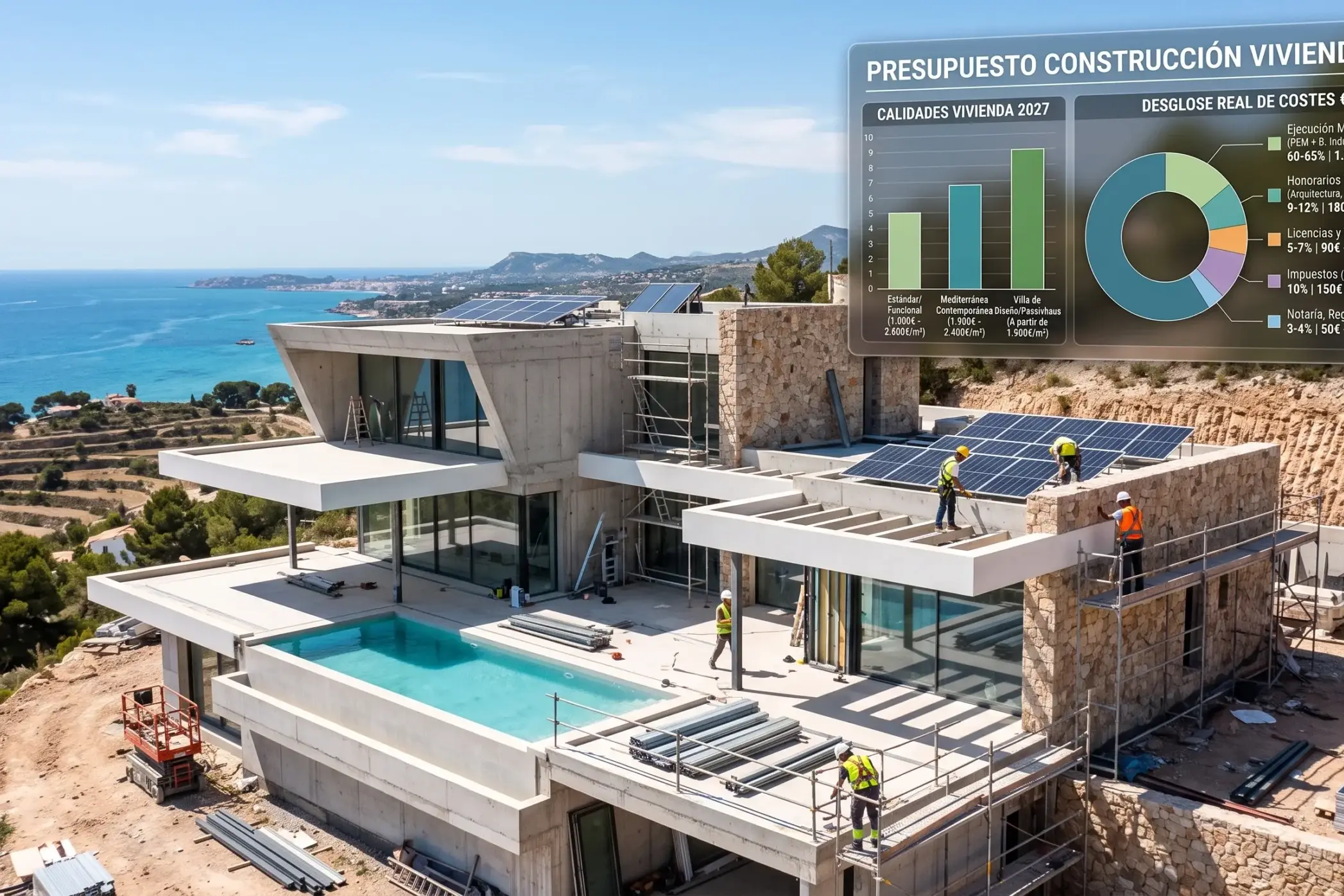
But between that first drawing and the finished villa lies a long, often invisible phase where the real quality of a home is determined.
That phase is construction supervision.
This is where the difference between a well-executed project and one that looks good only on paper becomes obvious.
On the Costa Blanca, this matters even more than usual.
The Mediterranean climate may be beautiful, but it is demanding. Salt in the air, constant humidity, intense sun exposure and easterly winds all put pressure on materials and construction details. Poor execution quickly reveals itself.
A project in Jávea that is not built with the same rigor with which it was designed can end up creating more long-term problems than the initial savings were ever worth.
Honest Materials: A Lesson Already Shaping Mediterranean Architecture
One of the ideas most often associated with Radić’s work is that of honest materials.
Stone should look like stone. Timber should age naturally. Concrete should not need to disguise itself behind decorative finishes.
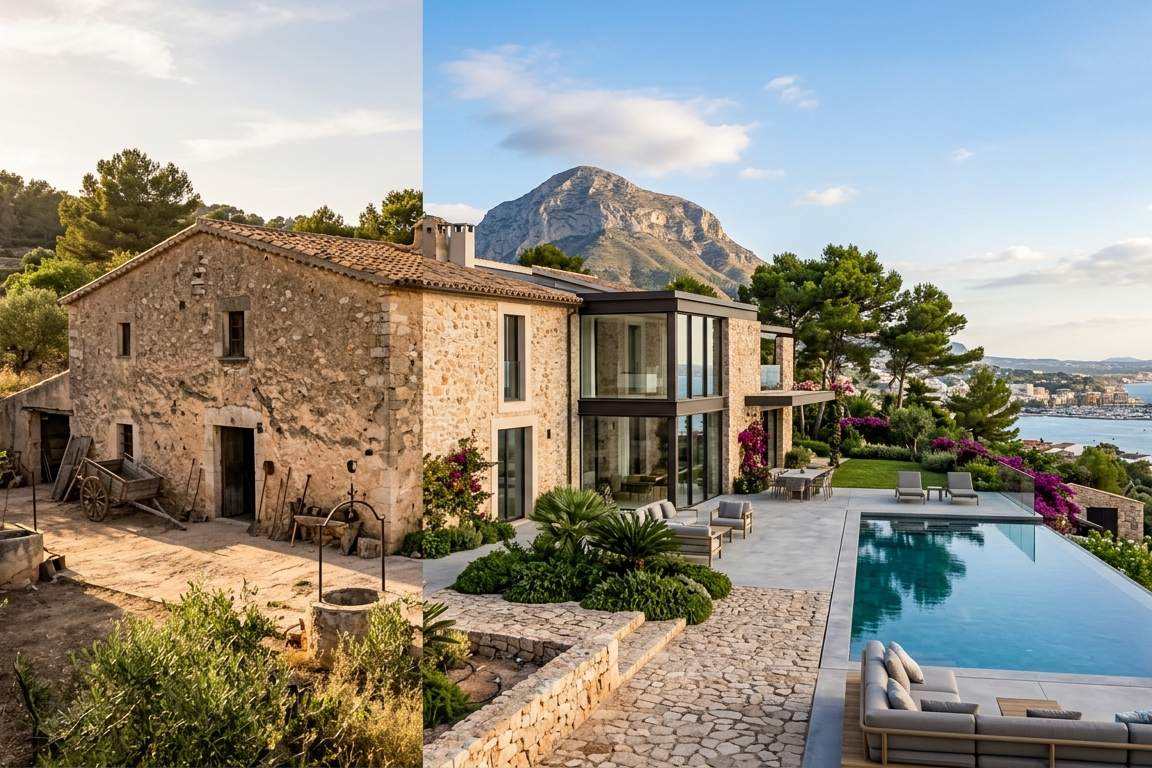
This philosophy is not far removed from what is already happening in many contemporary villas in Jávea, where there is growing demand for locally rooted materials—natural stone, lime-based finishes and handcrafted ceramics—rather than generic finishes that could belong anywhere in the world.
But selecting good materials is only part of the equation.
What matters just as much is how they are installed.
A poorly executed stone façade can deteriorate within a couple of winters. The exact same material, handled with skill and precision, can improve with age and gain character over time.
This is not simply about aesthetics.
It is about craftsmanship.
And craftsmanship is precisely what the Pritzker jury chose to place above dramatic architectural gestures.
Designing for Place, Not for the Algorithm
Another striking characteristic of Radić’s work is how little it seems shaped by media trends.
He does not design for virality.
He designs for lived experience—for how a space actually feels, functions and responds to its surroundings.
There is an important lesson here for anyone planning a villa in Jávea or a home in Dénia.
The best project is not always the one that looks most impressive in a drone shot.
More often, it is the one that responds intelligently to the orientation of the plot, the slope of the land and the way a particular family will actually live in that home over the next twenty or thirty years.
An architect in Jávea who understands the local terrain, topography and climate can anticipate critical construction decisions long before they become costly problems.
That often becomes the difference between a home that constantly needs repairs and one that ages gracefully.
In many ways, this reflects the same principle behind Radić’s Pritzker win:
Architecture does not stand on design alone.
It stands on how well it is built.
How to Apply This Thinking to Your Own Project
If you are considering a renovation, extension or new-build project in Jávea, this year’s Pritzker offers a few very practical lessons worth keeping in mind before signing anything.
- Ask to see completed projects, not just renders or computer-generated visuals.
- Find out who will supervise construction on a day-to-day basis, not simply who designed the project.
- Make sure the conversation includes materials and construction details—not only layouts and square metres.
- Be cautious of proposals sold purely on visual impact without explaining how the house will perform against the easterly winds and humidity of the Marina Alta.
In the end, the lesson behind this Pritzker is simple to express but difficult to improvise:
Great architecture is defined by how it ages, not by how it looks on the day the keys are handed over.
Frequently Asked Questions
What exactly did the 2026 Pritzker jury recognise?
The jury honoured Smiljan Radić for his rigorous approach to construction and for the way he works with materials in direct dialogue with their surroundings, rather than for a highly recognisable visual style or spectacular landmark projects.
What does an international architecture award have to do with a villa in Jávea?
More than it may seem.
The core principle recognised by the jury—the importance of execution over image—is exactly what separates a genuinely well-built home from one that simply photographs well at first.
Why is construction supervision especially important in Jávea?
Because the local climate is highly demanding on materials and construction details.
Salt, humidity and easterly winds quickly expose poor workmanship—far more aggressively than in inland climates.
What should I ask my architect to ensure good execution?
Ask to see completed projects, not only visualisations, and make sure the studio remains actively involved during the construction phase, not just the design stage.
Are local materials better than imported ones for a villa in Jávea?
It is less about origin and more about suitability.
Local stone, lime and ceramic materials often perform exceptionally well in this climate when properly used, but craftsmanship remains the decisive factor.