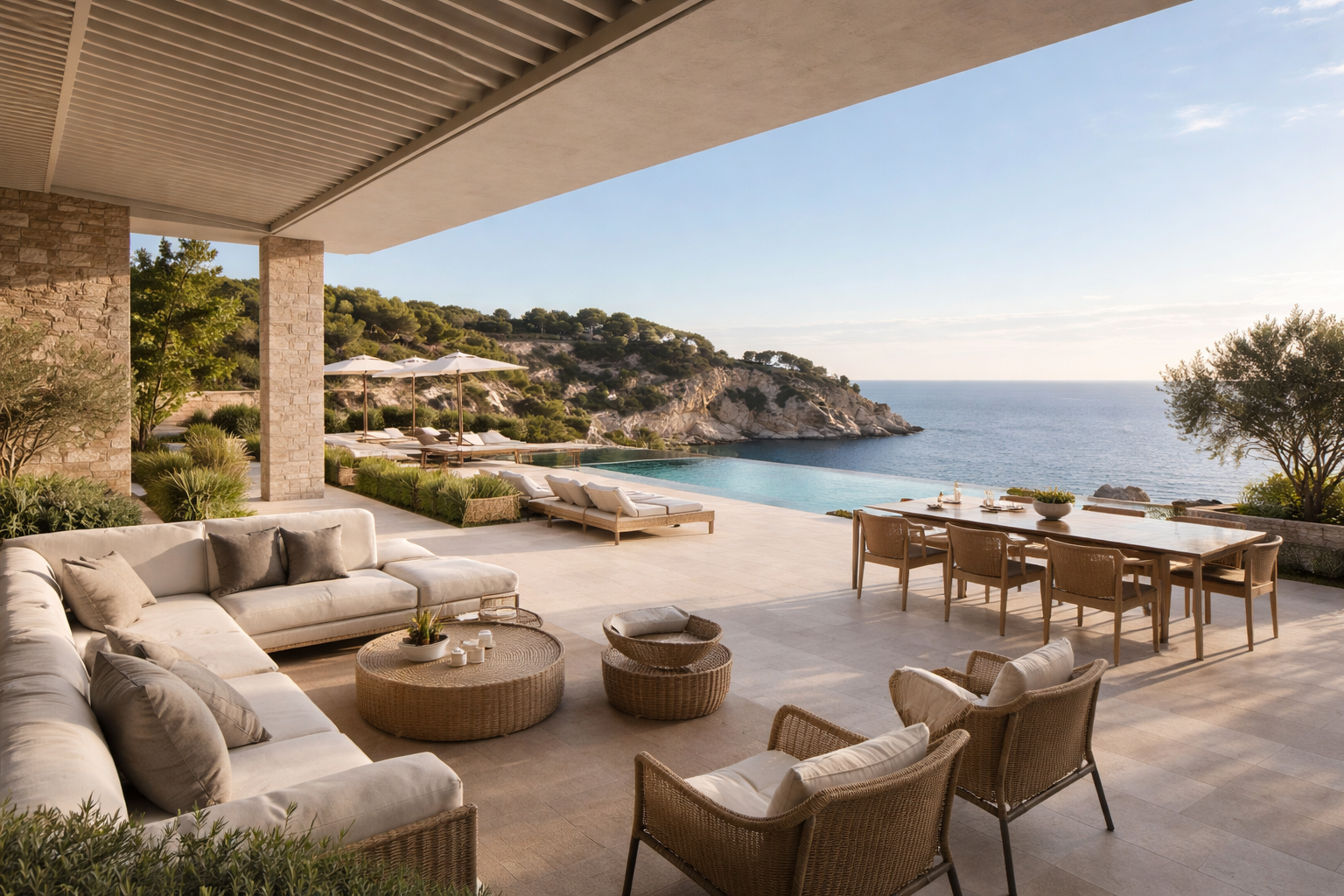
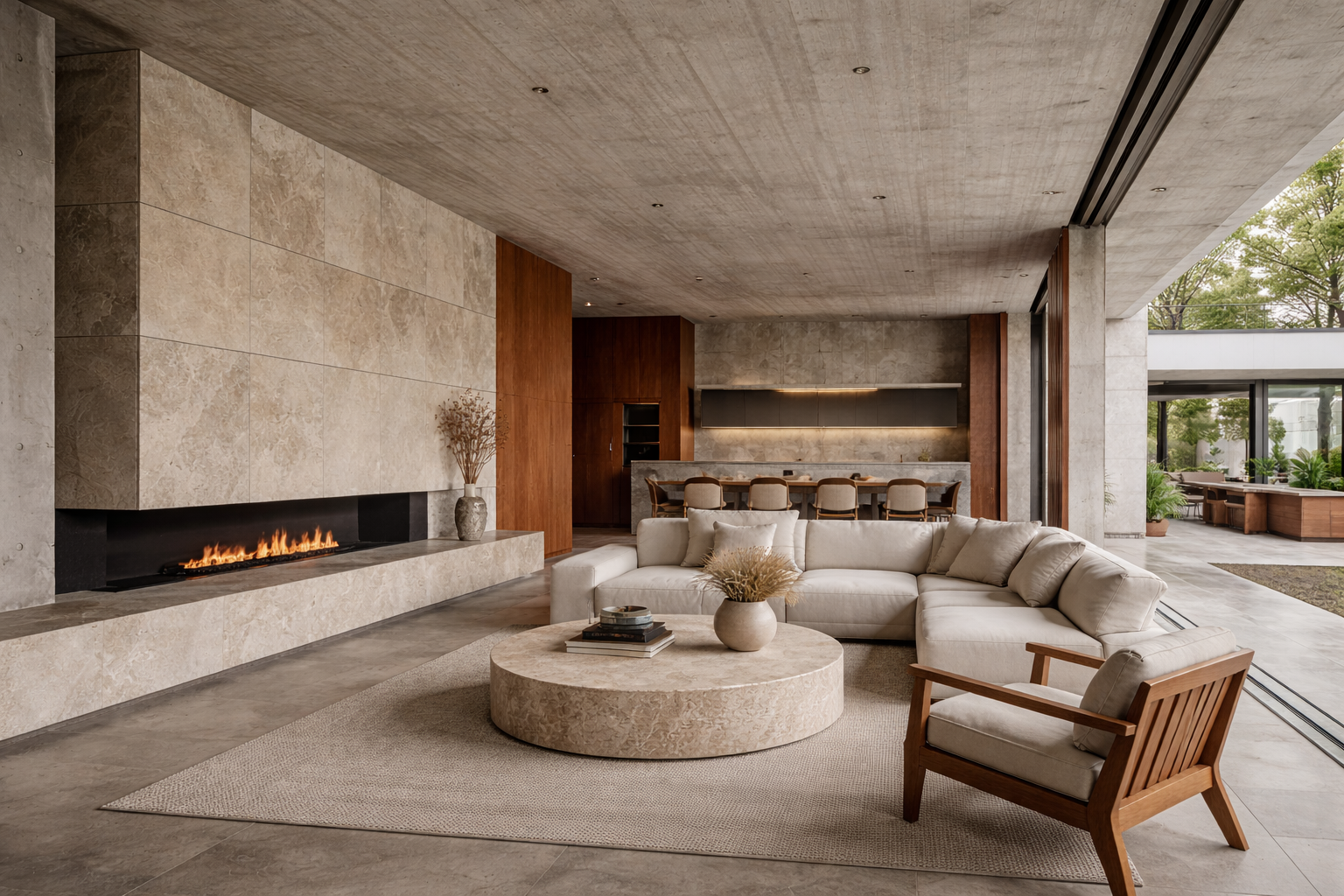
Although your house has two lives, we often only pay attention to one. On one hand, there is the daytime life, defined by the natural light of the Costa Blanca. On the other hand, we have the night-time life, which is a blank canvas. This is where architectural lighting comes into play.
It is not simply about “seeing in the dark”. On the contrary, the goal is to shape the space, create intimacy, and evoke emotions when the sun goes down. At La Quinta Fachada, we view light as an essential material, just as important as stone. If the design is poor, the house will seem cold. Conversely, a good project turns it into a work of art.
Beyond the bulb: The key difference
To understand luxury, we must first distinguish between two basic concepts.
-
Lighting up: This is a functional act. For example, flat office light that removes shadows.
-
Illuminating: This is the art of highlighting what is important. In architectural lighting, shadow is necessary. In fact, deciding what we leave dark is what adds mystery and warmth to the home.
Colour temperature: The secret to comfort
Have you ever walked into a house and felt like it looked like a clinic? Generally, the culprit is the colour of the light. That is why, in luxury residences, we avoid cold whites. We work only with warm tones:
-
2700K: Ideal for living rooms and bedrooms. It is a golden light that, furthermore, invites relaxation.
-
3000K: Perfect for kitchens and bathrooms. It is a soft white that allows you to see clearly, but without losing elegance.
Invisible light: Coving and recesses
Nowadays, the trend is for the lamp not to be seen. That is to say, we want to see the effect of the light, but not the bulb. To achieve this, architectural lighting uses integration:
-
Ceiling coving: We create recesses in the ceiling where we hide LED strips. Thus, the light bounces and falls softly.
-
Grazing light: We hide lights close to stone or wood walls. In this way, the light highlights the texture spectacularly.
Smart control: Light that adapts
It is useless to have the best lights if you only have a simple switch. True luxury is flexibility. Therefore, we use smart systems to create “scenes”:
-
“Guest” scene: Lowers the general light and, at the same time, illuminates the garden.
-
“Cinema” scene: Turns everything off, except for a dim light on the floor.
-
“Cleaning” scene: Turns everything on to the maximum to work well. Thus, the house changes mood with a single button.
The spa bathroom and the kitchen
Furthermore, each room needs a different strategy:
-
The bathroom: It is no longer just functional; it is a Spa. That is why we combine light for the mirror with very soft ambient light for relaxing in the shower.
-
The kitchen: This is the centre of the house. We need strong light for cooking, but also warm lamps over the island for when friends come over.
The garden: Nocturnal setting
Finally, in our climate, the garden is lived in a lot at night. However, a common mistake is to install powerful spotlights that dazzle. The best strategy is theatrical: lighting an olive tree from below or placing low lights on paths. In short, the light should invite you to step outside.
If you want your project to have value for 24 hours, architectural lighting is fundamental. Contact us to design your nights.