When designing a high-end single-family home, one of the first conceptual decisions is the architectural language. On the Costa Blanca, and especially in areas such as Jávea, this choice usually moves between two main approaches: the contemporary modern villa and the traditional Mediterranean villa. Although they are often presented as opposing options, the reality is far more nuanced.
Understanding the real differences between these two styles is essential in order to make the right decisions from the very beginning of the project.
Origin and architectural concept
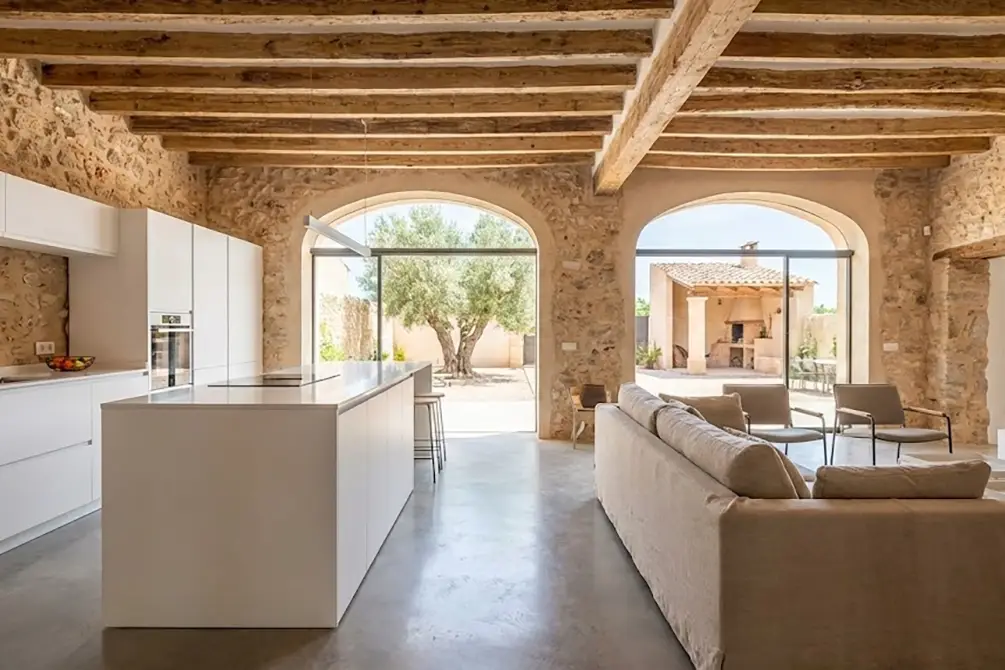
The traditional Mediterranean villa originates from vernacular architecture, shaped by climate, local resources and historical ways of living. Solid walls, pitched roofs, controlled openings and intermediate spaces such as porches and terraces are part of its DNA.
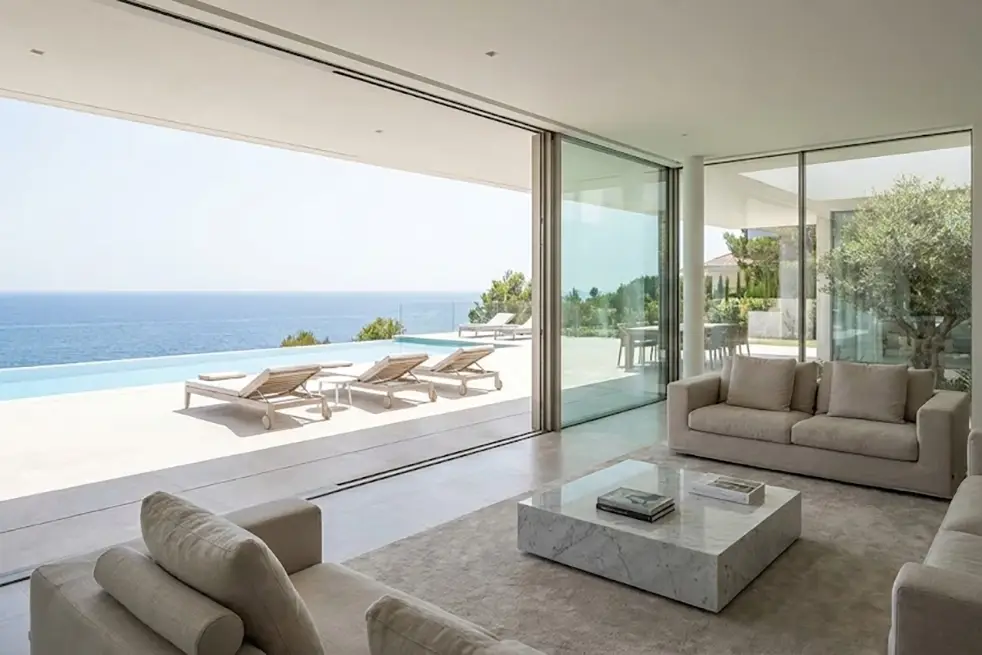
The modern villa, by contrast, responds to a contemporary approach: open spaces, clean geometries, a strong continuity between interior and exterior, and a more abstract architectural language. It is not just a matter of aesthetics, but a different way of understanding the home and its relationship with its surroundings.
Relationship with the environment and the landscape
One of the main debates between these two styles lies in how they integrate into the landscape.
Traditional Mediterranean architecture tends to blend in, using light colours, natural materials and a domestic scale that dialogues with the terrain. Modern architecture, on the other hand, opts for a more conceptual integration: volumes adapted to the topography, large openings towards the views and a direct relationship with the exterior.
On plots with sea views or steep slopes—common in the northern Costa Blanca—the modern approach allows for greater compositional freedom. However, when carefully designed, contemporary Mediterranean architecture can also offer highly effective solutions.
Spatial organisation and ways of living
Here we find one of the clearest differences:
Traditional Mediterranean villas
- More compartmentalised spaces
- Gradual transitions between interior and exterior
- Homes historically designed to protect from heat
- Open and flexible floor plans
- Large glazed surfaces
- Spaces conceived for a contemporary lifestyle, more fluid and connected
Today, however, many projects combine both approaches, adapting them to real year-round living.
Materials and construction systems
Traditional architecture typically relies on materials such as continuous render finishes, natural stone, ceramic roof tiles and more restrained joinery systems.
Modern architecture, by contrast, incorporates materials that pursue a more refined aesthetic, such as exposed concrete, large high-performance glazing systems, more complex façade solutions and technical materials focused on efficiency and durability.
The key is not the style itself, but choosing materials that respond properly to the climate, maintenance requirements and the real use of the home.
Regulations, efficiency and contemporary architecture
A less visible but fundamental aspect is current building regulations. Many “catalogue-style” Mediterranean villas do not adequately meet today’s requirements for energy efficiency, thermal comfort and solar control.
This is why so-called contemporary Mediterranean architecture emerges as a logical evolution: it maintains traditional formal references while incorporating modern criteria of sustainability, orientation and technology.
Modern or Mediterranean? The right answer
In professional practice, the real question is rarely “modern or traditional”, but rather what kind of architecture truly makes sense for a specific plot, its surroundings and the way its inhabitants live.
In places such as Jávea, many of the most successful villas are the result of hybrid solutions, where tradition and contemporary design are balanced in a natural way. That balance is, today, the true expression of architectural luxury.
Frequently Asked Questions
What is the main difference between a modern villa and a traditional Mediterranean villa?
The difference lies in the approach: modern villas prioritise open spaces and contemporary language, while Mediterranean villas are rooted in tradition and climate adaptation.
Which style works best on the northern Costa Blanca?
It depends on the plot and how the house will be used. In many cases, a hybrid solution offers the best results.
Is a modern villa less energy efficient?
Not necessarily. When well designed, it can be even more efficient than a poorly oriented traditional villa.
Is Mediterranean architecture still relevant today?
Yes, when it is interpreted through contemporary criteria rather than as a formal replica of the past.
Is it possible to combine both styles in the same house?
Not only is it possible, it is common in well-conceived projects in Mediterranean environments.