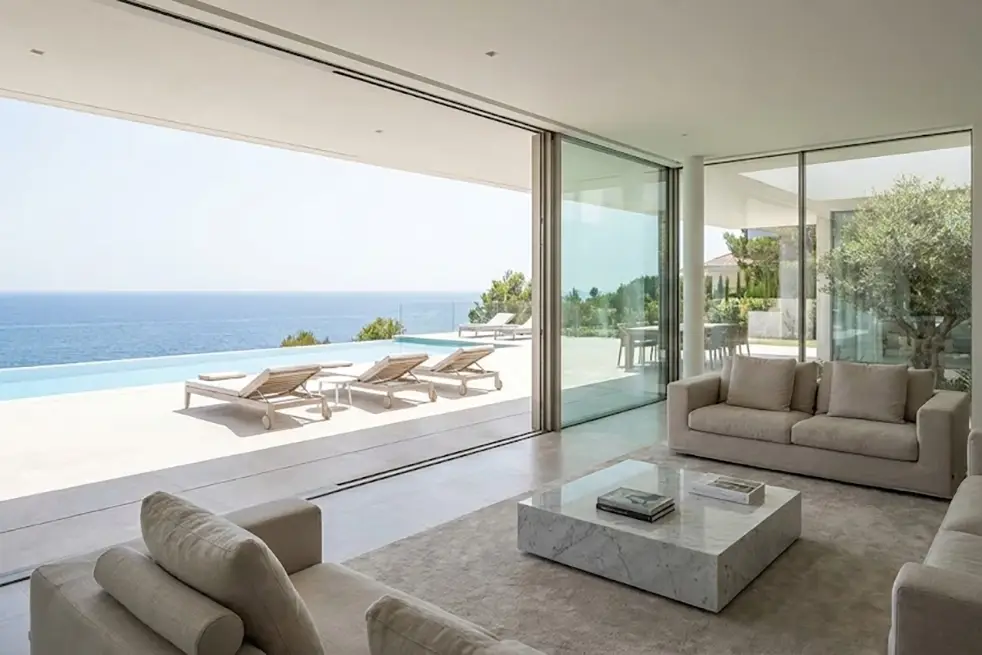
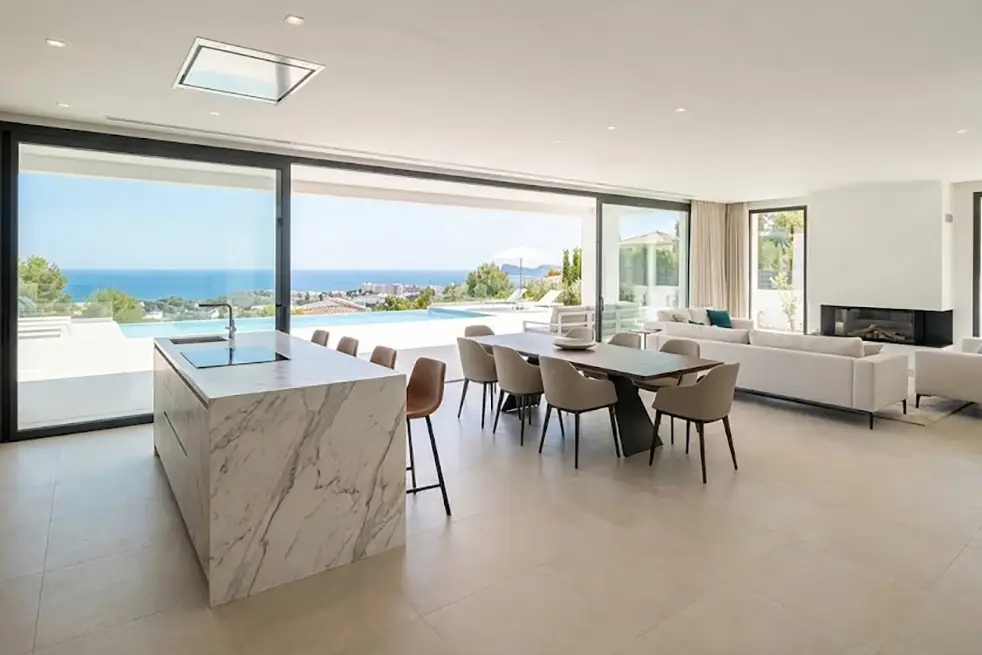
Taking the decision to renovate a rustic finca in the inland Costa Blanca is to embark on a thrilling architectural adventure. When you find that property with thick walls in Benissa, the Vall de Pop, or the rural districts of Javea, the attraction is usually instant. However, transforming an ancient agricultural building into a contemporary luxury home requires much more than aesthetics; it requires precise technical surgery.
At La Quinta Fachada, we understand that refurbishing these spaces does not mean erasing their history or disguising them. On the contrary, the goal is to heal the building’s pathologies and drastically elevate the comfort levels, ensuring that centuries-old stone coexists with the most advanced technology of the 21st century.
Diagnosis: What the stone hides
The charm of the old often hides technical challenges that cannot be solved with a simple coat of paint. Before thinking about decoration, the first step in these types of projects is to sanitise the construction base.
-
Rising damp: This is the silent enemy of village houses. Those stains at the base of the walls cannot be fixed by covering them with cement. The correct solution involves letting the wall breathe using traditional lime mortars and creating ventilated voids under the new floor screed to cut off the water ascent.
-
Thermal insulation: Old buildings are cool in summer, but very cold and damp in winter. To ensure energy efficiency, we must insulate the envelope. If we want to preserve the exposed stone exterior, the strategy involves dry lining and insulating internally.
-
Structural health: It is fundamental to review the condition of the wooden beams (often old Mobila pine). A structural survey is non-negotiable to detect termites or woodworm before loading weight onto the floors.
Light and space: The challenge of traditional architecture
Originally, these dwellings were designed to protect against the sun, with tiny windows and low ceilings to conserve animal heat. The main challenge when renovating a rustic finca is to reverse this logic to flood the house with brightness.
Our strategy is usually to “open the box”. We work by creating new strategic openings in the façade, sometimes through modern vertical slits that respect the rhythm of the original openings. On other occasions, the key lies in removing false ceilings added in later decades. By doing so, we recover the original height up to the roof structure, leaving the timber frame exposed and gaining a spectacular volume of air.
Materiality: The honest dialogue
Once the technical side is resolved, the magic of interior design arrives. The most common mistake is falling into “faux rustic” or pastiche. Our philosophy at La Quinta Fachada is material honesty: the new must look new, and the old, old.
We seek harmonious contrast. Imagine a minimalist kitchen, with handleless matt white lacquer, installed against a 200-year-old irregular masonry wall. Or a bathroom clad in continuous microcement under a ceiling of reeds and knotty beams. That tense but balanced dialogue between eras is what defines true luxury.
The riurau and outdoor life
On the Costa Blanca, rehabilitation does not end at the house walls. Vernacular elements like the “riurau” (the ancient arched porches used for drying raisins) are jewels that must be reintegrated into domestic life.
Instead of enclosing them with aluminium, we propose large frameless fixed glass panels (minimalist glazing) that allow the space to be climate-controlled without altering its visual aesthetics. We convert old corrals into chill-out courtyards and transform irrigation cisterns into modern pools that look like they have always been there.
If you have acquired a property with history and want to turn it into an exceptional home without giving up modern comforts, contact us. We are experts in renovating a rustic finca, listening to what the building needs.