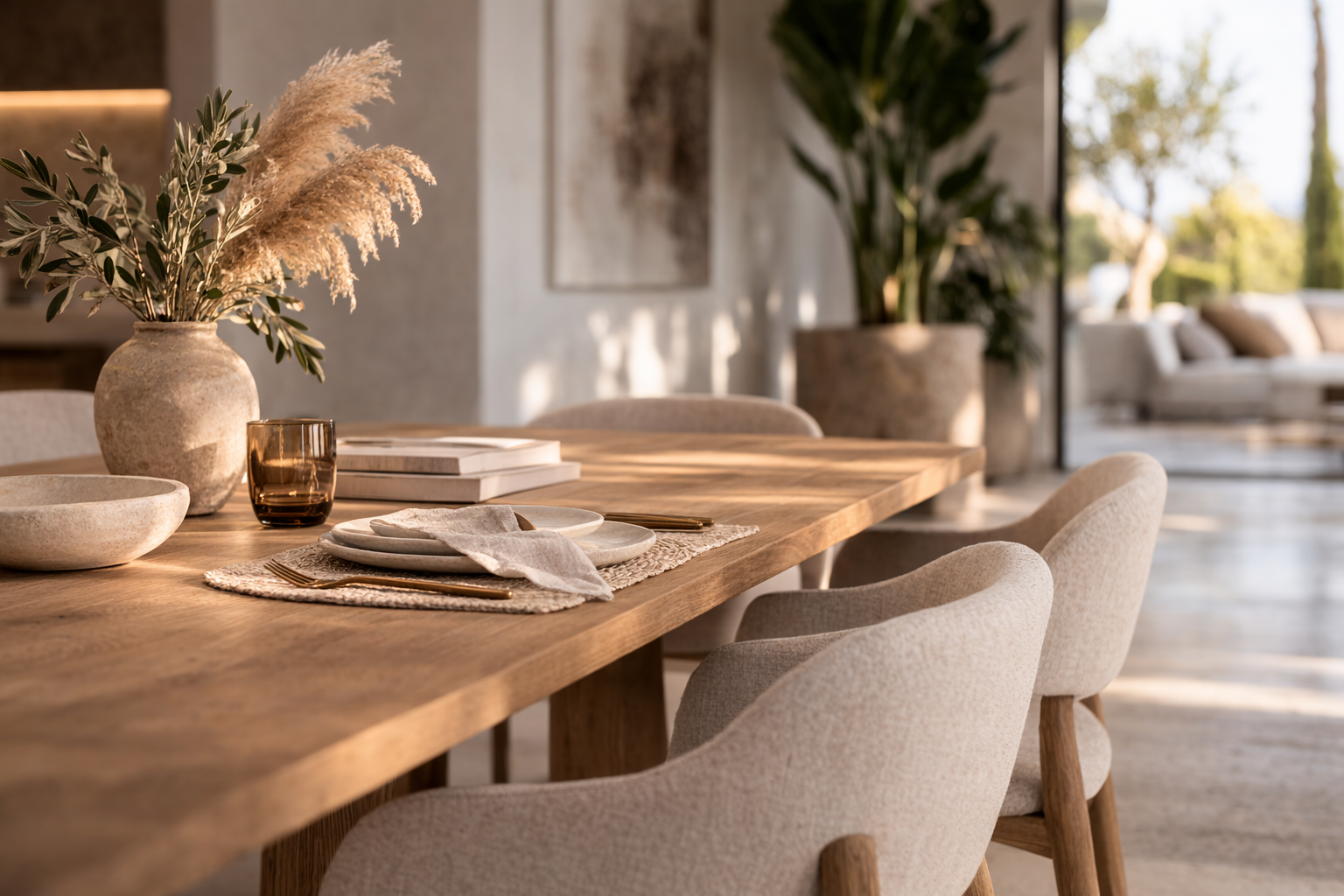
The design of a home does not begin with the façade or the choice of materials. It begins with the way each space will be lived in. A well-planned residential project is developed with the understanding that residential architecture is not only contemplated: it is lived in every day.
Architecture residential in the Costa Blanca: designing spaces to live better
Designing a home on the Costa Blanca means understanding the climate, the light, and the Mediterranean way of life. Residential architecture in this environment cannot be detached from its location: it must respond to orientation, views, and the constant relationship with the outdoors.
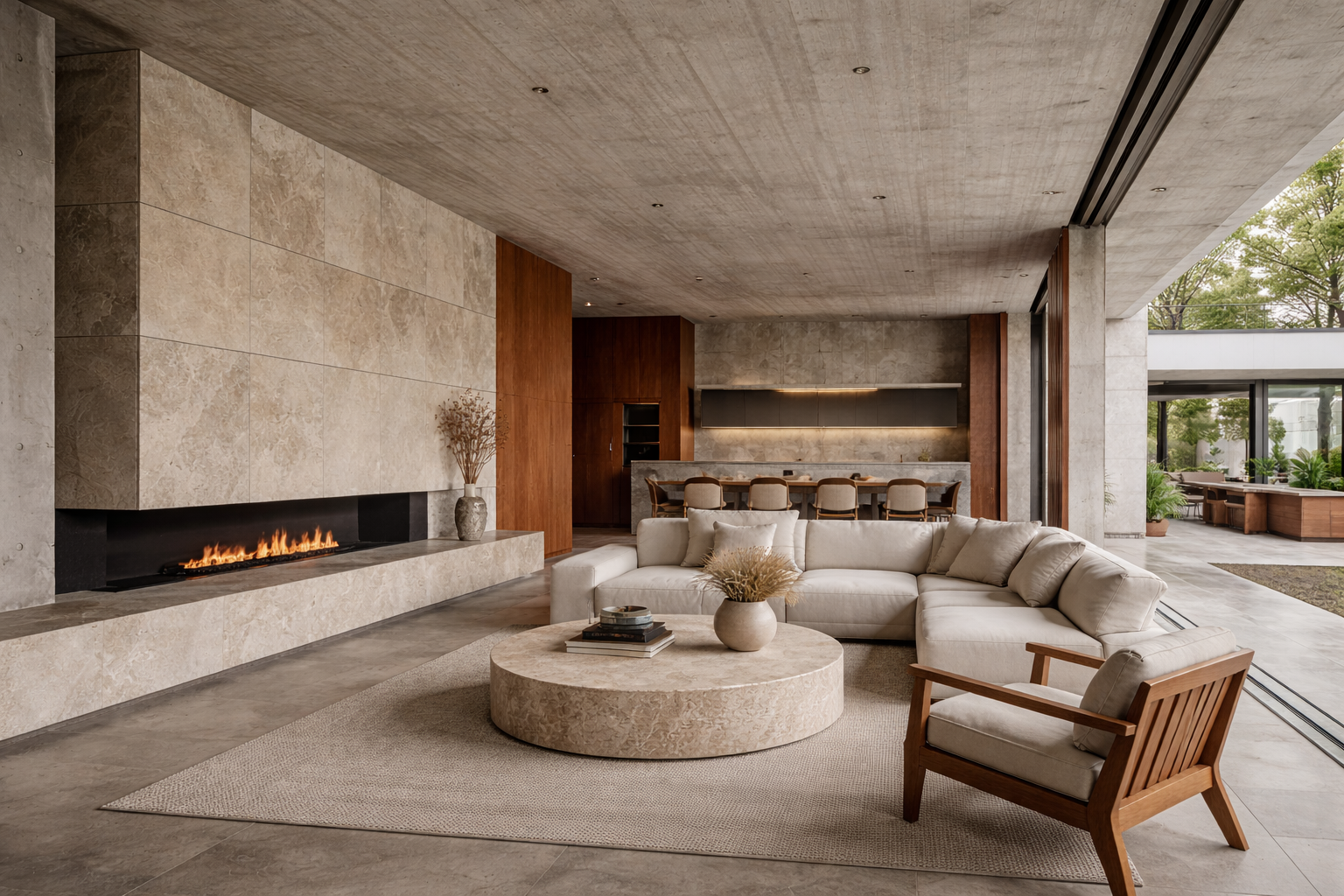
A well-planned housing project begins with the idea of how the home will be lived in throughout the entire year, not only at specific moments. Open spaces, smooth transitions between interior and exterior, and a well-thought-out layout allow the home to function comfortably on a daily basis.
When an architectural project adapts to its environment and to the people who will inhabit it, the home ceases to be an object and becomes a place designed to live better. Beyond aesthetics, residential design must prioritise comfort, efficiency, and the experience of living in it every day.
The layout in a well-resolved housing project
In single-family home design, interior organisation is the foundation of well-being. Clearly separating activity areas from rest areas allows the home to function without interference and improves privacy.
A coherent architectural project considers:
- Hierarchy between public and private spaces
- Fluid and logical circulation
- Direct relationship between kitchen, dining area, and outdoor spaces
- Independence of bedrooms from social areas
It is not about adding more square metres, but about structuring space with intention.
Natural light and orientation in housing design on the Costa Blanca.
In the design of a home on the Costa Blanca, orientation determines how the house is lived in. It is not only about opening large windows, but about understanding how light enters throughout the year and how it influences daily comfort.
In a well-planned housing project, the design must take advantage of natural light without generating overheating, protect from excessive solar radiation, and encourage cross ventilation.
In this context, the housing project adapts to its surroundings: it analyses slopes, views, and climatic conditions. Well-designed residential architecture responds to its location and does not impose generic solutions.
When orientation is resolved from the very beginning of the architectural project, the home not only works better: it feels better.
Interior–exterior integration in housing design.
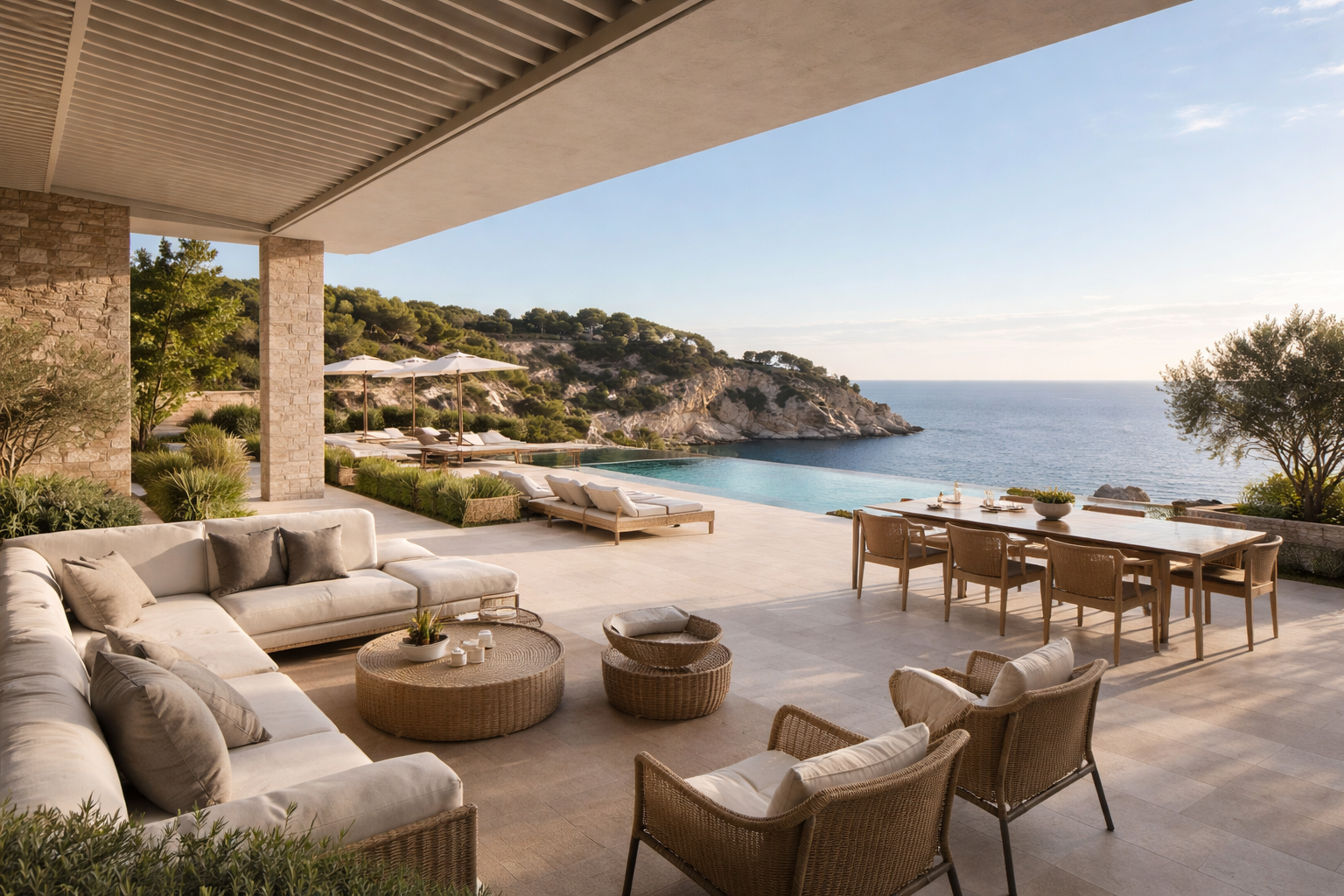
In housing design, the relationship between interior and exterior is not an aesthetic gesture, but a way of expanding the experience of living in the home. The architectural project must understand the exterior as an active part of the house, not as an independent element.
Porches, patios, and terraces function as intermediate spaces that soften the boundary between inside and outside. In a coastal home, this transition allows the climate to be enjoyed, improves natural ventilation, and creates a greater sense of spaciousness.
When residential architecture correctly integrates these areas, daily life extends beyond the built square metres and the home gains a richer and more balanced spatial quality.
Spaces designed for real rest.
In home design, rest does not depend solely on the bedroom, but on how the entire architectural project is organised. The location of the most private areas, away from zones of greater activity, is key to ensuring daily tranquillity and comfort.
In a home designed to be lived in, rest begins long before entering the bedroom. It begins in how the house is laid out, in the absence of unnecessary noise, and in a balanced atmosphere throughout the day.
Light, a comfortable temperature, and the relationship with the outdoors influence daily rhythms and prepare the space for calm.
When home design incorporates these principles from the outset, rest is not limited to a specific room, but becomes a natural part of the way the home is enjoyed.
Frequently asked questions.
Why is it important to integrate interior and exterior in a home?
Because it expands living spaces and improves ventilation and the relationship with the surroundings. In coastal homes, this connection is essential to enjoy the Mediterranean climate.
How can a home be adapted to the Mediterranean climate?
By taking advantage of natural light, protecting from excessive sun in summer, and encouraging cross ventilation. Architectural design must respond to the climate from the very first concept.
Why is layout important in a single-family home?
Because it organises daily life within the house. A well-designed layout improves functionality, privacy, and the feeling of comfort.
What should be considered before starting a housing project?
Before beginning a housing project, it is essential to study the plot, orientation, and local regulations. These initial decisions condition the design and the final comfort of the home.
How can a functional and bright home be achieved?
Through a housing design that studies orientation, natural light entry, and the connection between spaces. When the project adapts to its surroundings and to the way of living, the home gains functionality and spatial quality.