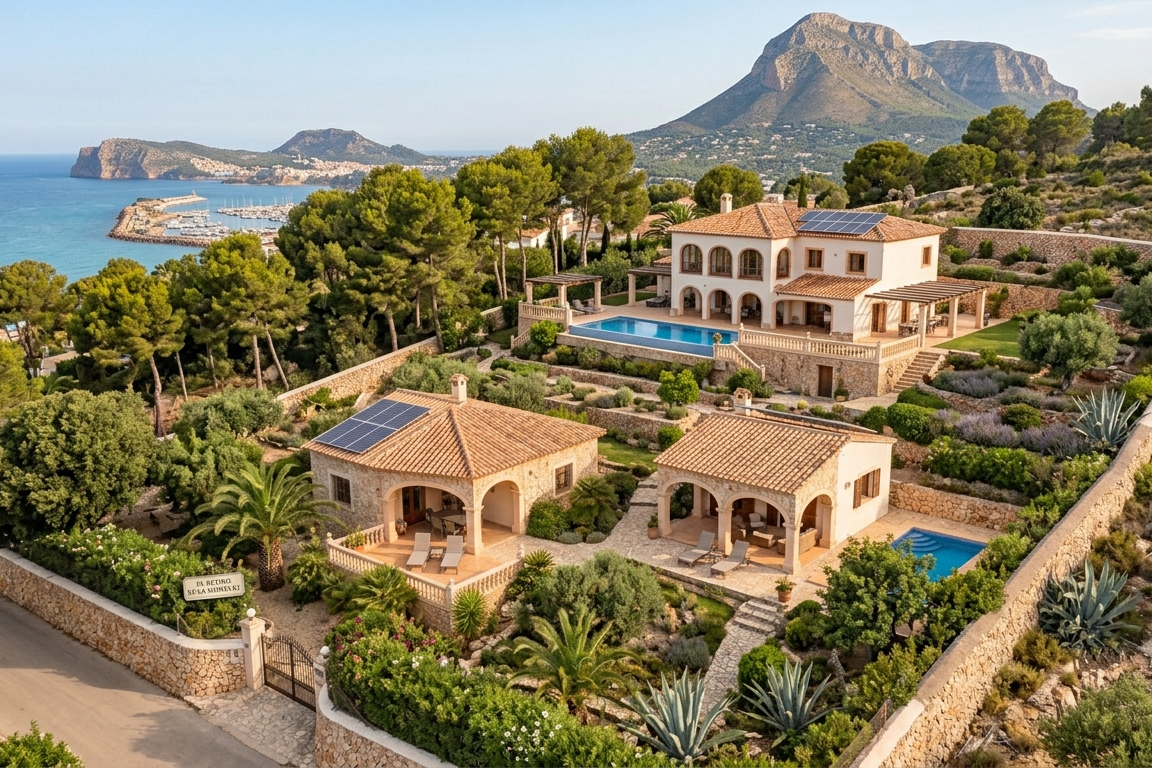
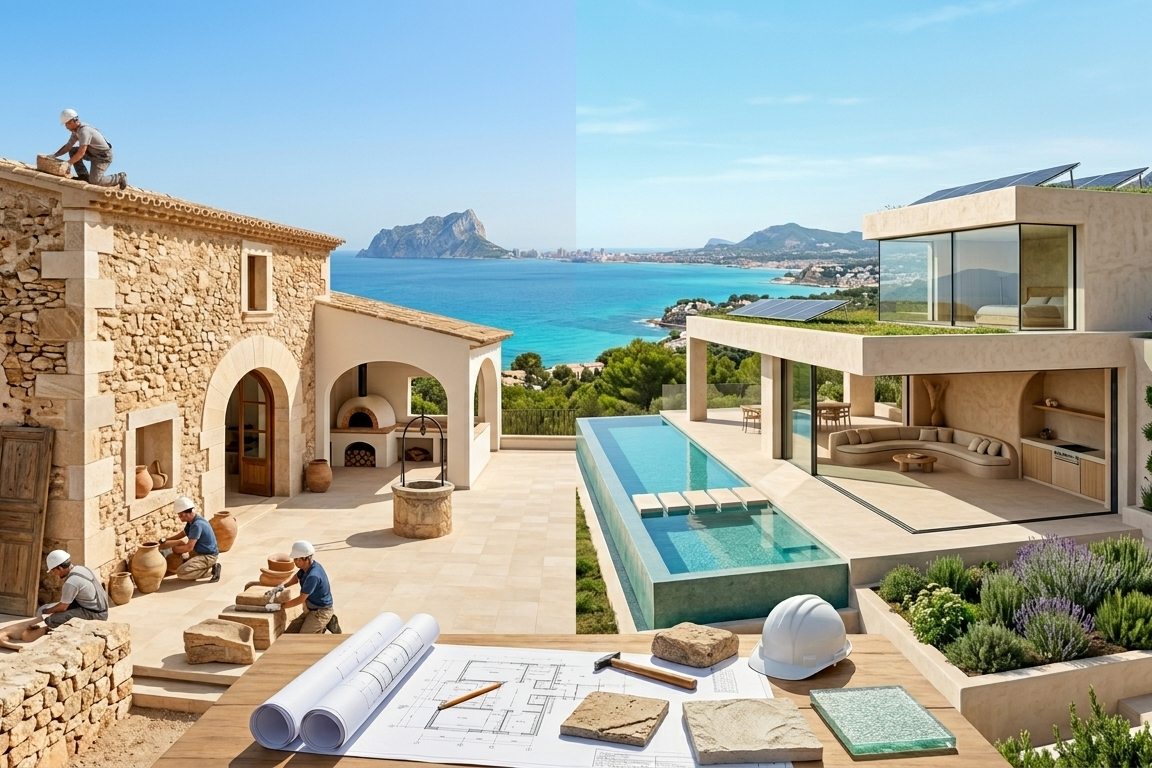
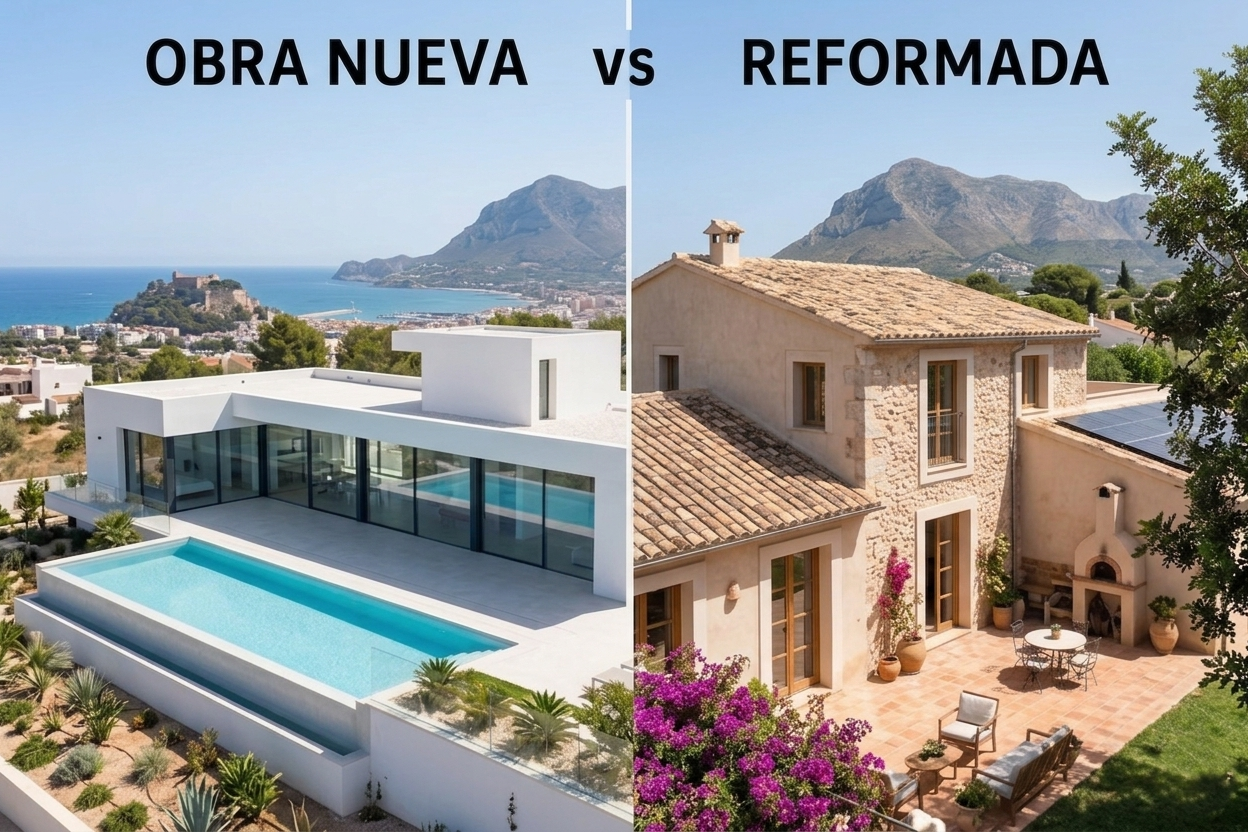
The indoor–outdoor relationship is a defining concept in contemporary architecture, particularly in residential projects located in privileged environments such as the Costa Blanca. It goes far beyond large windows or open terraces—it is about designing a seamless spatial experience where architecture, landscape, and lifestyle merge naturally.
At La Quinta Fachada, we see this connection as a fundamental design strategy to create bright, energy-efficient homes that respond to the Mediterranean climate and modern ways of living.
What is the indoor–outdoor relationship?
The indoor–outdoor connection aims to blur the boundaries between built space and nature, allowing exterior areas—such as terraces, patios, porches, gardens, and pools—to become true extensions of the interior.
This approach is essential in:
- Contemporary residential architecture
- Luxury villas and custom homes
- New-build projects and high-end renovations
Benefits of a strong indoor–outdoor design
- Natural light and wellbeing
Opening the home to the outside enhances natural daylight, improves comfort, and creates healthier living environments.
- Energy efficiency
Proper orientation, solar protection, and cross ventilation help reduce energy consumption and improve thermal comfort year-round.
- Visual and spatial continuity
Large sliding glass doors and continuous flooring create a sense of openness and visually connect interior spaces with the surrounding landscape.
- Architectural value
Homes with a well-designed indoor–outdoor relationship offer higher architectural and real estate value, especially in bespoke residential projects.
Architecture and landscape as one
Indoor–outdoor architecture cannot exist without landscape design. Gardens and outdoor areas are conceived as part of the architectural concept from the very beginning.
A well-designed project considers:
- Native and sustainable vegetation
- Natural shading and outdoor circulation
- Views, privacy, and orientation
- Integration with the natural surroundings
The architect’s role in indoor–outdoor living
An experienced residential architect is essential to achieve a balanced indoor–outdoor connection. Each project requires a tailored architectural response, based on:
Location and climate
Client needs
Lifestyle and use of space
At La Quinta Fachada, we design homes from a holistic perspective—architecture, landscape, functionality, and construction management—ensuring spaces that are meant to be lived in, both inside and out.
Architecture designed to be lived
Indoor–outdoor living changes the way we experience architecture. Spaces open, adapt, and flow throughout the day, creating homes designed for comfort, enjoyment, and timeless design.
If you are looking for an architecture studio that values context, design quality, and meaningful spaces, the indoor–outdoor relationship is where it all begins.
Frequently Asked Questions
What is the indoor–outdoor relationship in architecture?
The indoor–outdoor relationship in architecture is a design approach that aims to integrate interior spaces with the surrounding outdoor environment, creating visual, functional, and environmental continuity. It is especially relevant in residential architecture and luxury villas.
Why is it so important on the Costa Blanca?
Thanks to the Mediterranean climate, natural light, and landscape, homes on the Costa Blanca can enjoy outdoor spaces year-round. A strong indoor–outdoor connection enhances comfort, lifestyle, and architectural value.
Does indoor–outdoor design improve energy efficiency?
Yes. A well-designed project improves solar orientation, natural ventilation, and thermal control, helping reduce energy consumption and increase indoor comfort.
Can this connection be achieved in renovation projects?
Absolutely. Many renovations focus on opening the home to the outside, increasing natural light, and connecting interior spaces with existing terraces or gardens.