Until recently, talking about solar self-consumption meant talking about an individual photovoltaic installation on a home’s own roof. That logic is starting to change in some developments in Jávea and Dénia, where several neighbouring villa owners are exploring shared energy arrangements between nearby plots — a trend that any architect in Dénia or architect in Jávea is now beginning to factor in from the design stage.
What an energy community actually is
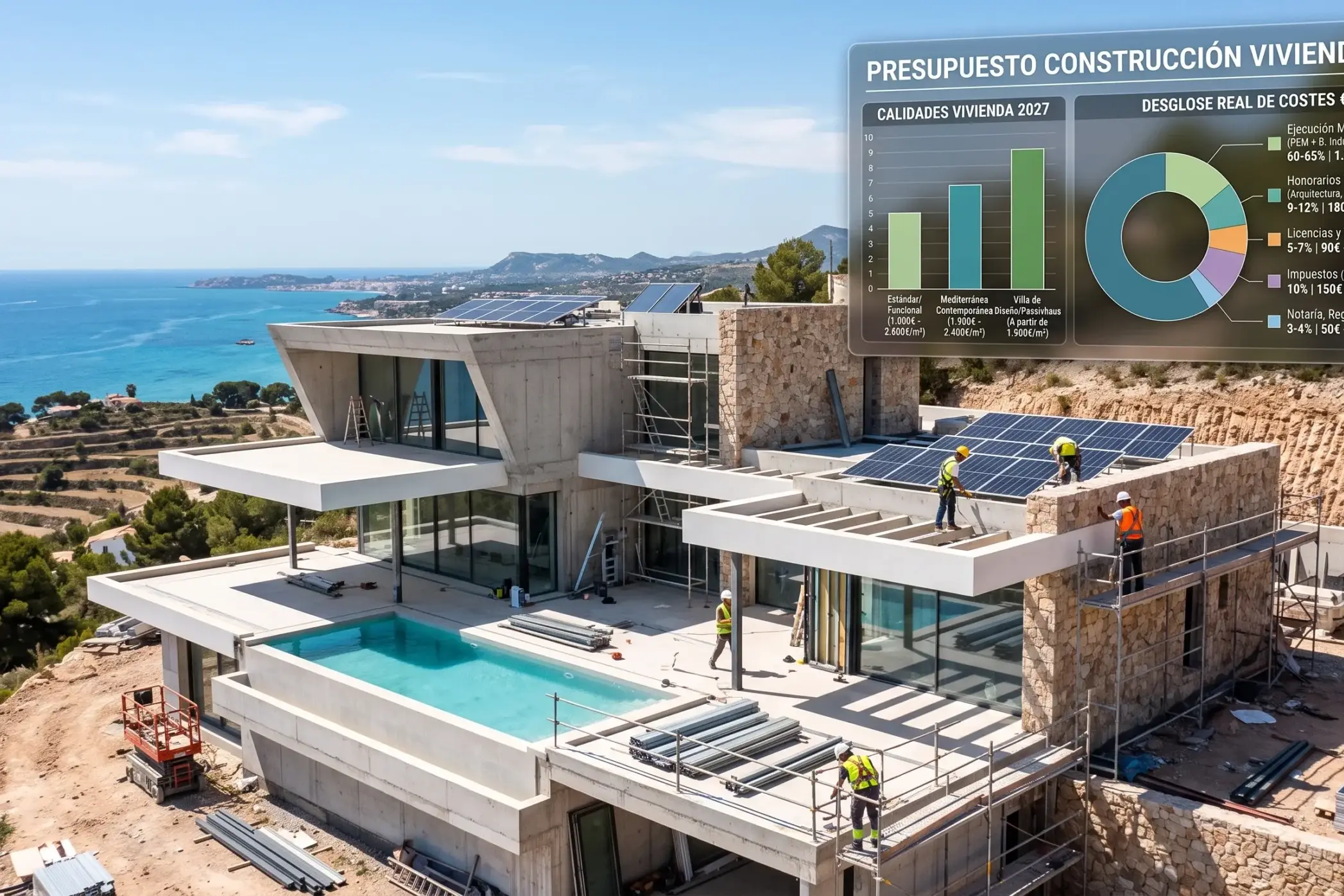
An energy community allows several nearby homes to share the output of one or more self-consumption installations, distributing the energy generated according to sharing coefficients agreed between participants. In the context of single-family villas in the Marina Alta, this usually translates into larger photovoltaic installations placed on the plot with the best orientation or least shading, with output shared among several nearby homes through the existing distribution network.
This approach is particularly useful for plots with roofs poorly suited to solar panels, whether due to shading from protected vegetation, unfavourable orientation, or aesthetic limitations imposed by municipal planning rules in certain developments.
What changes in home design
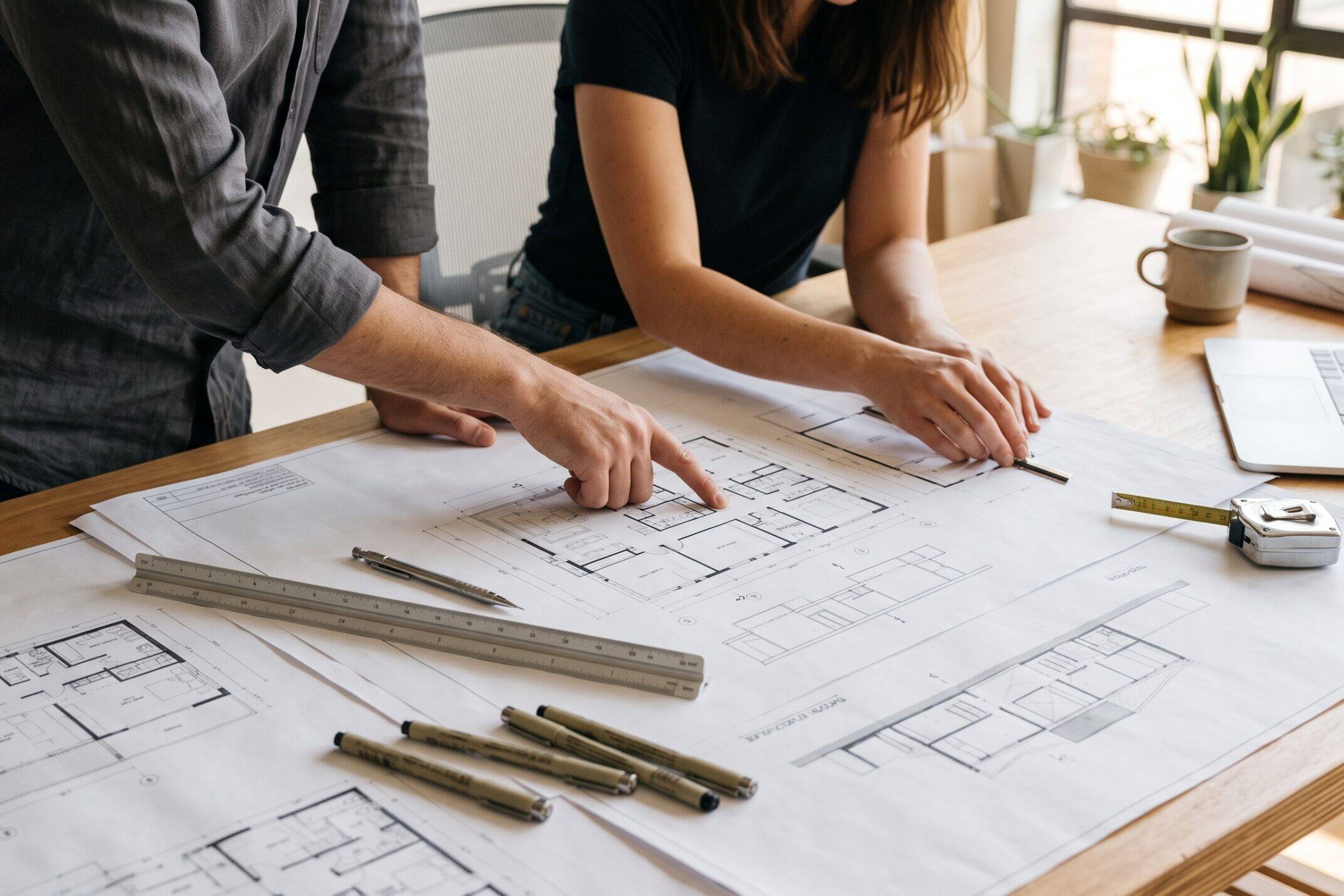
Building in the possibility of an energy community from the project stage involves decisions that go beyond simply installing solar panels. Technical space must be planned for shared batteries or inverters, electrical connections need correct sizing, and in some cases coordination with neighbouring properties is required for cabling easements between plots. All of this needs to be reflected in the project from its earliest stages, rather than added on afterwards, to avoid extra works once the house is finished.
Architecturally, this also opens the door to rethinking the roof as a functional element as well as an aesthetic one: orientations and pitches that used to be decided purely on design grounds are now also being assessed for their energy production potential, even when the final installation sits on the neighbouring plot.
A shift driven by both regulation and neighbours
Spain’s regulatory framework for collective self-consumption has, in recent years, widened the allowed distance between an installation and its consumption points, making it easier for villas within the same development — even if not adjoining — to form part of the same energy community. Add to this a shift in mindset among villa owners in Jávea and Dénia, who increasingly ask about this kind of solution even before the architect raises it.
Practices such as La Quinta Fachada, along with other studios in the Marina Alta, are now bringing this variable into initial client meetings, particularly in multi-plot developments or in areas where some neighbourly relationship already exists between owners.
What to raise if this option interests you
Anyone considering building a villa in Jávea or Dénia who is interested in this approach should ask, already at the preliminary design stage, about the technical feasibility of sharing an installation with nearby plots, the distribution agreements needed between owners, and the technical space that must be reserved within the home for shared equipment.
Frequently Asked Questions
What is an energy community in the context of single-family villas? It’s an arrangement allowing several nearby homes to share the output of a self-consumption installation, distributing the energy generated according to coefficients agreed between owners.
Why is this option gaining interest in Jávea and Dénia? Because it allows plots with better orientation or less shading to produce energy shared among several nearby homes, even if a given roof isn’t ideal for panels.
What changes in home design if an energy community is planned? Technical space must be planned for shared batteries or inverters, electrical connections properly sized, and possible cabling easements between plots coordinated.
Do homes need to be adjoining to share an installation? Not always; regulations have widened the allowed distance between the installation and consumption points, making it easier to share energy between plots in the same development even if not direct neighbours.
What should I ask my architect if I’m interested in this approach? It’s worth asking about the technical feasibility of sharing an installation with nearby plots, distribution agreements between owners, and the technical space needed within the home.