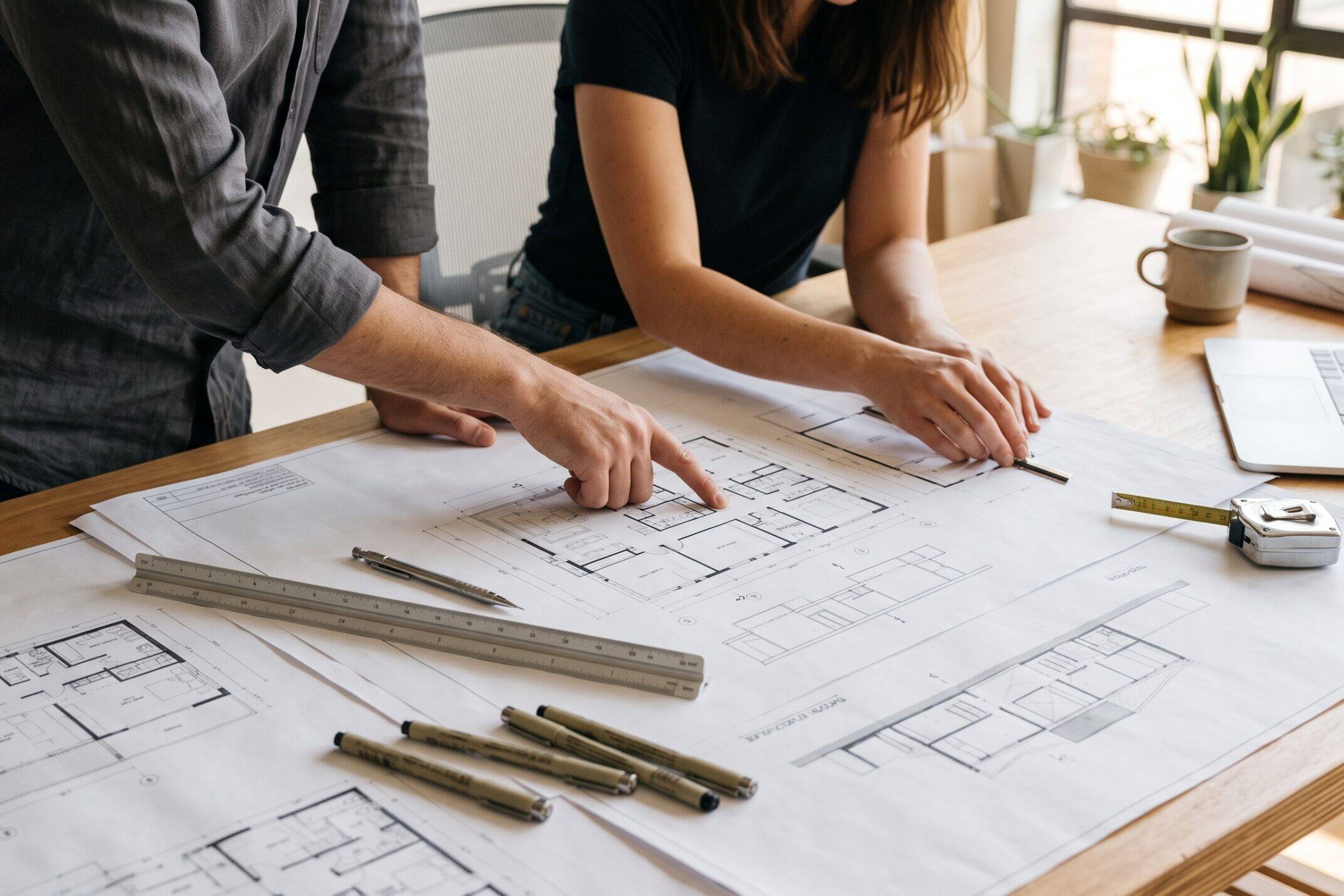
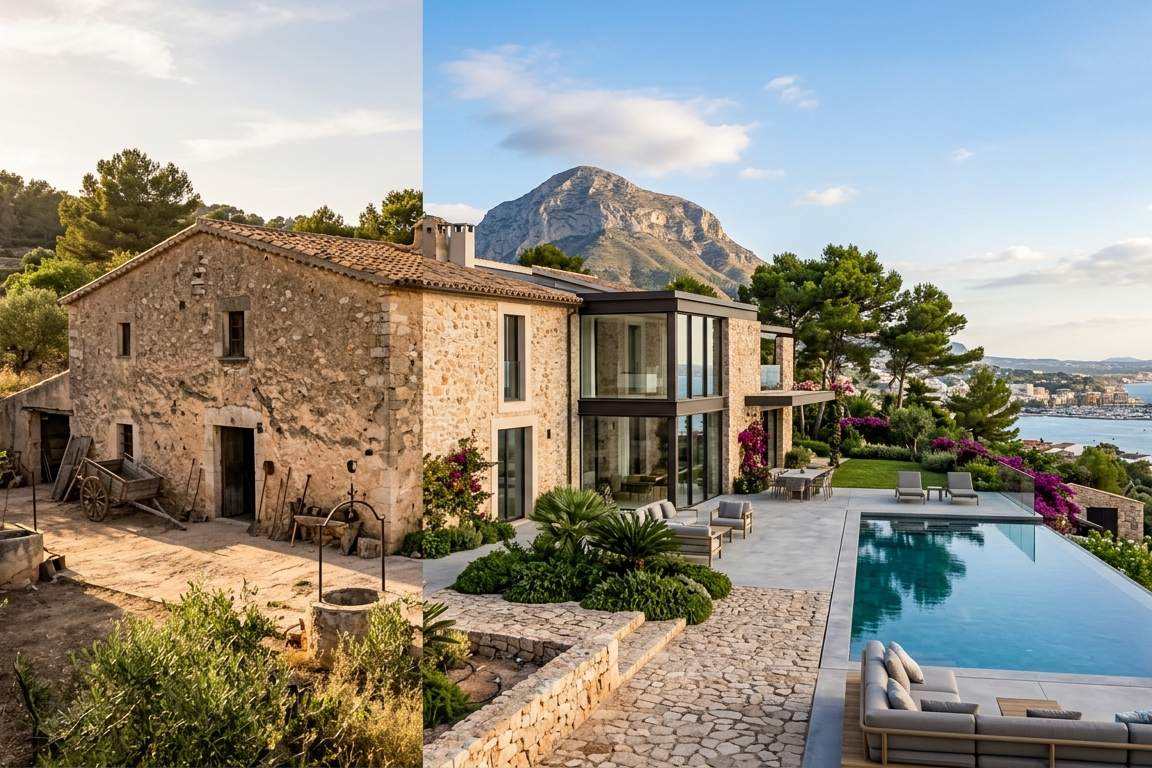
Before the first drawing, before any render, even before discussing style, a villa already begins to take shape. Not through form, but through a series of early decisions that, although often invisible, determine the success of the entire project.
These initial decisions are not a formality. They are an essential part of any well-considered residential design process. In complex and highly valuable contexts such as Jávea, where landscape, climate and planning regulations play a decisive role, understanding the place before designing is a matter of architectural responsibility.
Starting with form: a common mistake
It is very common for a project to begin with references, images or preconceived ideas about volumes and aesthetics. However, when architecture starts from form rather than analysis, conflicts quickly arise with the reality of the plot, local regulations or the actual way the house will be used.
Good architecture does not impose an idea onto a place. It interprets it. And requires pausing before drawing.
The plot is not just a datum – it is the project
A plot is more than a buildable surface. It is a set of conditions that define how a house can — and should — be built.
Orientation, topography, distant and immediate views, access points, neighbouring buildings and shadows all directly influence the layout, volume and organisation of the villa. Ignoring any of these aspects at an early stage usually leads to forced changes later, affecting both architectural quality and cost.
Understanding the plot as an active part of the project is one of the key differences between a standard villa and a truly well-designed one.
Planning regulations: the visible framework
Planning regulations should not be something checked at the end of the process. They define the framework within which the project must operate from the beginning.
Maximum heights, buildability, setbacks, permitted typologies or roof conditions all shape the design, even when they are not immediately visible. When regulations are understood early on, they become part of the design logic rather than a limitation.
This is where proper architectural guidance is essential, allowing the project to develop with clarity and coherence.
Climate and real use: designing beyond the image
Designing a villa is not only about summer living. Winter sun, wind exposure, humidity, natural ventilation and the relationship between indoor and outdoor spaces all affect comfort throughout the year.
Equally important is how the house will actually be used. A permanent home requires different decisions than a seasonal residence. Designing purely for appearance often results in houses that look good but are uncomfortable to live in long-term.
Anticipating real use is a fundamental part of responsible residential architecture.
Budget and expectations: aligning them from the start
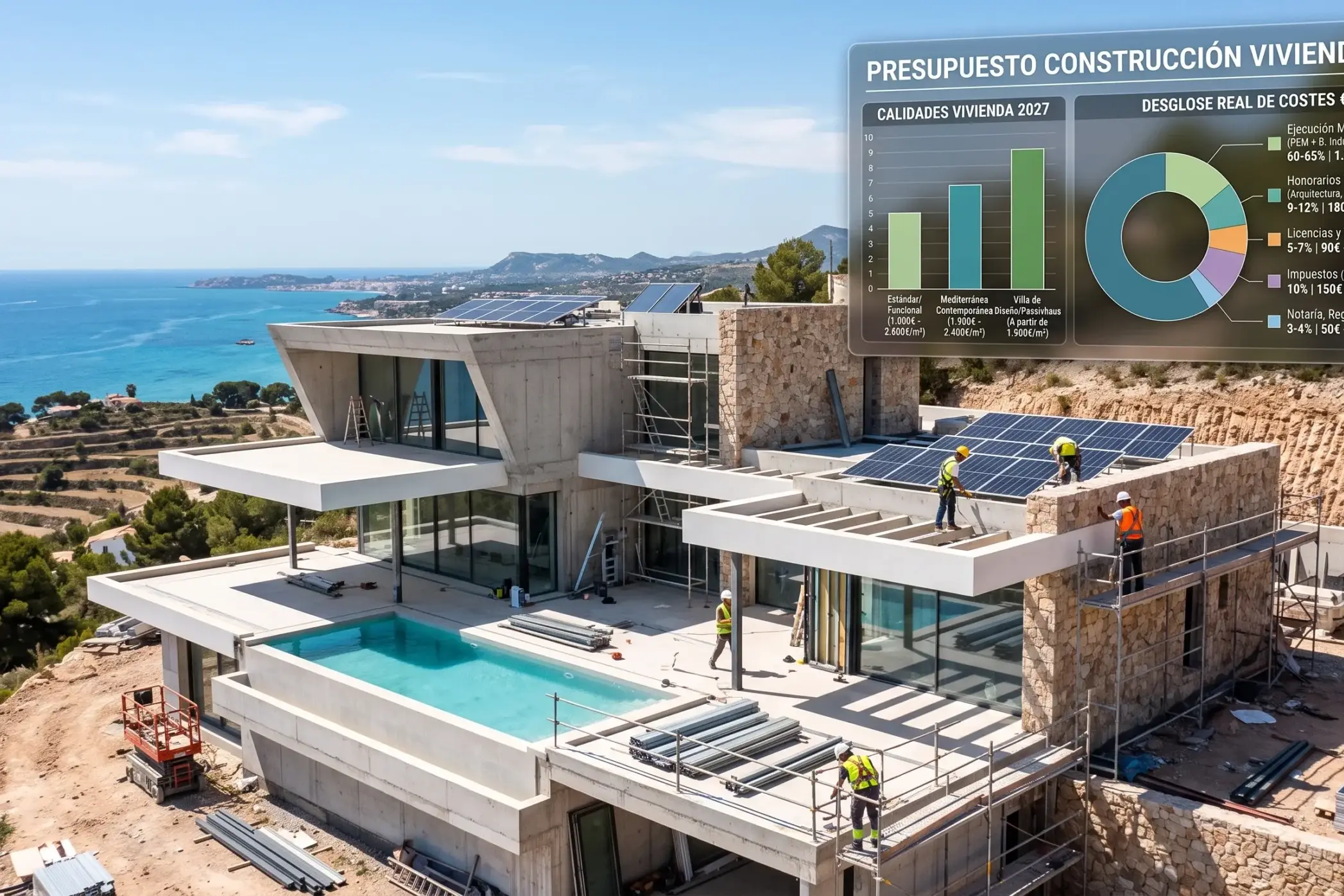
Another common mistake is postponing discussions about budget. In reality, the order in which architectural decisions are made has a direct impact on the final cost of the villa.
Clarifying priorities, understanding what truly adds value and avoiding unnecessary complexity leads to a more coherent and efficient project. Well-designed architecture is not about adding more elements, but about making better decisions.
When early decisions are right
When these aspects are properly addressed from the outset, the project evolves naturally. Design decisions make sense, changes during development are minimal, and the final villa responds clearly to its environment, climate and users.
This is why working with an architect in Jávea from the earliest stages makes a real difference. Not only in the final design, but in the entire experience of the process. Because a well-designed villa does not begin with drawings — it begins with the right decisions.
Frequently ASked Questions
Why is it so important to make key decisions before designing a villa?
Because factors such as orientation, planning regulations, intended use and budget shape the project from the very beginning and are difficult to change later on.
When is the right time to work with an architect?
From the earliest stages, even before defining the design concept or purchasing the plot, in order to assess feasibility and avoid fundamental mistakes.
Do planning regulations limit architectural design?
No. When properly understood, planning regulations provide a framework that can be naturally integrated into the design process.
What are the benefits of working with local architects?
Local knowledge of the context, regulations and environment, which is especially important in places like Jávea.